


A daily wash may seem like the safest response to muddy legs, but repeated washing can irritate the skin and leave it damp. When turnout is wet and muddy day after day, it can be hard to know whether to wash, dry or leave the mud alone. A practical approach to mud fever prevention wet weather starts with managing moisture and handling the skin gently, rather than reaching for a product first.
This guide sets out a repeatable routine for muddy days, from making turnout as dry as practical to checking your horse’s lower legs without disturbing healthy skin. You’ll learn when dried mud can be brushed away, when careful cleaning and thorough drying may be needed, and how to make leg checks part of everyday care, even when wet weather makes routines harder to maintain.
Mud fever can look like ordinary scurf at first, so noticing changes early matters. We’ll cover signs such as scabs, swelling and heat, and when to seek veterinary advice, so you can care for your horse with greater confidence through the wet months.
Key Takeaways
- Shape mud fever prevention wet weather care around your horse’s skin, turnout conditions and access to a dry resting area.
- Check the legs before cleaning, then choose the gentlest practical approach for the mud and skin you find.
- Consider turnout, drier areas and protective equipment as parts of an individual plan, rather than relying on one solution for every horse.
- Don’t assume every scab is mud fever or pick it away. Note changes and seek veterinary advice if you’re concerned.
- Keep topical skin care optional and supportive, following product guidance without using it in place of good management or veterinary advice.
Mud fever in wet weather: what raises the risk?
A run of wet days can make even a simple leg-care routine difficult. A consistent, gentle approach can help you manage risk, although no routine can guarantee that a horse will avoid skin problems. For mud fever prevention wet weather care, it helps to know what to look for and why persistent dampness can make the skin more vulnerable.
Mud fever is a general name for inflammation and irritation of the skin on a horse’s lower legs, often around the pasterns and heels. It may involve crusts, soreness or broken skin. It is also called pastern dermatitis, but this describes a group of skin problems rather than one condition with a single cause. Bacteria, fungi, mites, irritation and other skin sensitivities may be involved, so appearance alone cannot confirm the cause.
What is mud fever, and where might signs appear?
Signs are often noticed around the heels, pasterns and fetlocks, but they can extend higher up the lower leg and won’t look the same in every horse. You might see redness, tenderness, scurf, scabs or areas of broken skin. Crusts or redness on their own aren’t a diagnosis: mud, ordinary dry skin and other conditions can look similar.
Mud fever is a useful starting point for learning about the condition and its alternative name, pastern dermatitis. However, a photograph or quick glance can’t reliably identify the cause. If the skin is sore, changing or worrying you, don’t assume it is harmless mud or that one particular organism is responsible.
Why can wet turnout make leg care harder?
When legs stay damp for long periods, the skin has less opportunity to dry between bouts of mud and rain. Persistent moisture may soften the skin, while grit and movement through muddy ground can add friction. If the skin is already irritated or damaged, these conditions can make problems more likely to develop. Horses with heavy feathering may retain more moisture around the lower legs, so checks can take a little more care.
Field conditions differ, as do horses’ skin, feathering and tolerance of handling. One horse may come in with mud that dries and brushes away easily; another may have sensitive skin or stay wet around the heels. Repeated washing can also be unhelpful if it leaves the legs damp or disturbs irritated skin. Choose what to do based on what you see, not simply on how muddy the horse looks.
Good management can reduce exposure to wet, muddy conditions, but it cannot guarantee that mud fever or another skin problem won’t occur. Treat regular checks and practical adjustments as ways to notice changes and support healthy skin, not as a promise of complete prevention.
A simple daily mud fever prevention routine for wet weather
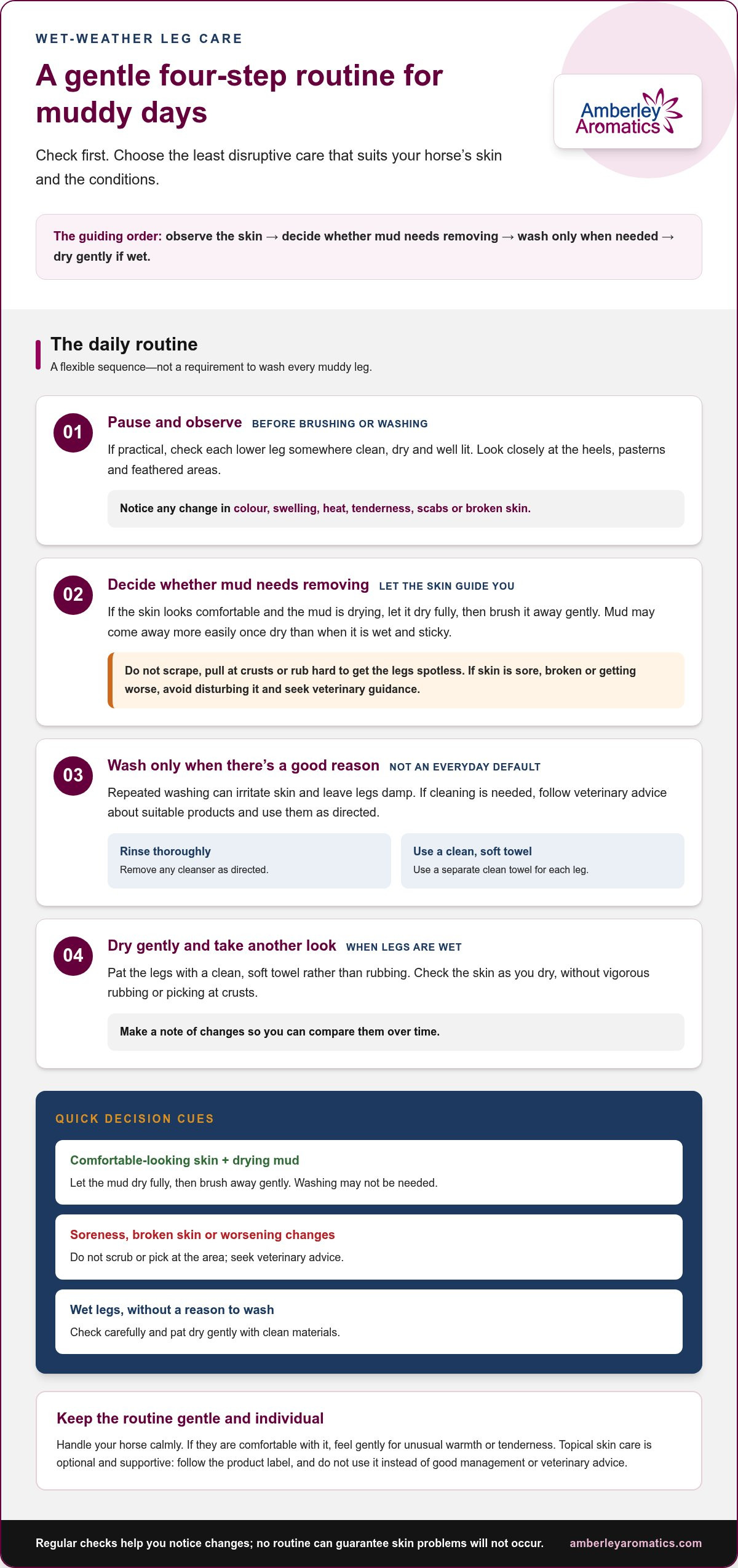
A useful routine doesn’t mean washing every muddy leg. Start by looking closely, then choose the gentlest care suited to your horse’s skin and that day’s conditions. This makes mud fever prevention wet weather care practical and responsive, rather than a rigid checklist.
Check the legs first, clean only when appropriate, then dry gently if they’re wet.
- Pause and observe. If practical, check each lower leg in a clean, well-lit place. Look at the heels, pasterns and feathered areas. Before brushing or washing, note any change in colour, swelling, heat, tenderness, scabs or broken skin.
- Decide whether the mud needs removing. If the skin looks comfortable and the mud is drying, let it dry fully before brushing it away gently. Don’t scrape, pull at crusts or rub hard to get the legs spotless. If the skin is sore, broken or getting worse, avoid disturbing it and seek veterinary guidance.
- Wash only when there’s a good reason. Repeated washing can irritate skin and leave legs damp, so it needn’t be part of everyday care. If cleaning is needed, follow veterinary advice about suitable products and use them as directed. Rinse thoroughly and use a clean, soft towel for each leg.
- Dry and take another look. If the legs are wet, pat them gently with a clean, soft towel. Check the skin as you dry, without rubbing vigorously or picking at crusts. Make a note of any changes so you can compare them over time.
How should you check and clean muddy legs?
Handle your horse calmly. If they’re comfortable with it, feel gently for unusual warmth or tenderness. Mud on healthy-looking skin may brush away more easily once it has dried than when it is wet and sticky. If you find soreness, broken skin or an area that is getting worse, don’t try to scrub it clean; ask your vet for advice on what to do next.
Should you dry your horse’s legs after turnout?
Drying is sensible when the legs are wet, but it should be gentle. Pat rather than rub, and use clean materials so you don’t transfer dirt between legs. If possible, carry out checks somewhere clean and dry, where you can see the skin clearly and your horse can stand comfortably.
Keep the routine flexible: a relatively clean, dry leg may need no washing, while persistently wet legs call for careful checks and gentle drying. For optional topical care, botanical horse skin care can be considered alongside thoughtful management, not as a replacement for it or for veterinary advice. Follow the product label.
Turnout, stable and leg protection: choosing a wet-weather approach
There isn’t one turnout plan that suits every horse or field. A horse may benefit from time in a drier area during the wettest spells, while another may be more settled with turnout and regular access to a dry place to rest. For mud fever prevention wet weather planning, weigh up the ground, your horse’s comfort and what you can check each day. Boots or creams don’t remove the need to inspect the skin.
When can turnout or stable changes help?
If gateways or parts of a paddock become heavily churned or saturated, consider whether you can rotate grazing, limit access to boggy areas or provide firmer footing in high-traffic spots. A dry resting area can give legs time out of the mud, but it doesn’t guarantee that skin problems won’t occur. Any change should still allow your horse to move comfortably and receive appropriate turnout, shelter and everyday care.
| Option | Possible benefit | Limitation | What to monitor |
|---|---|---|---|
| Usual turnout | Maintains a familiar routine and freedom to move. | Wet, churned ground may mean prolonged mud exposure. | Field condition and changes to the lower legs. |
| Drier turnout or resting area | May reduce time spent standing on saturated ground. | Space, weather and daily facilities can limit what’s practical. | Comfort, access to shelter and whether legs can dry. |
| Leg coverings | May offer a physical barrier in some circumstances. | Poor fit, trapped moisture or movement can cause rubbing. | Fit, cleanliness, dampness and any marks on the skin. |
| Topical skin care | May be considered as optional support for the skin. | It doesn’t replace suitable management or veterinary advice. | Skin condition and product directions before use. |
Do mud fever boots help in wet weather?
Leg coverings may suit some horses and situations, but they need close attention. Check that they fit comfortably, stay clean and don’t rub as your horse moves. Moisture trapped beneath a covering can be a concern, so remove it as needed to inspect the skin and follow the equipment instructions. If you notice dampness, rubbing or irritation, stop using the boots. Seek veterinary advice if the skin is sore or getting worse.
Treat each choice as part of a flexible plan, not a stand-alone fix. Field conditions may change from one day to the next, so pair practical adjustments with regular skin checks and adapt your approach to the horse in front of you.
Early skin changes: what to do and when to call the vet
A muddy leg can hide a change in the skin, but not every scab or patch of scurf is mud fever. Pastern skin problems can have different causes, and trying to identify one by appearance alone may lead to the wrong response. Look calmly, avoid picking or scrubbing, and seek veterinary advice if you’re unsure or the area is changing.
Which changes should you monitor closely?
Look out for redness, soreness, swelling, broken skin or increasing crusting, especially if the affected area seems to be spreading. Your horse’s response matters too: flinching, shifting away or resisting a gentle check may suggest discomfort. These signs don’t confirm a diagnosis, but they are useful details to share with your vet.
Make a simple note of when you first noticed the change and whether it looks or feels different at the next check. If you take a photograph for your own record, use it to track changes rather than diagnose the condition. Don’t lift crusts to see what’s underneath; this can disturb sensitive skin.
When should a vet assess your horse?
Contact your vet for advice if skin changes are painful, worsening, spreading or persistent. Seek prompt help if the leg is significantly swollen or hot, or your horse is lame or seems unwell. Discharge, particularly if it has an unpleasant smell, is another reason to get veterinary guidance. If the skin is broken or looks infected, avoid applying home treatments unless your vet has advised you to do so.
Prevention care helps manage exposure and supports routine observation; active, painful or worsening skin changes need veterinary assessment. While waiting for advice, handle the area gently, don’t pick at scabs, and note any changes in comfort or appearance. Your vet can assess the skin and advise on appropriate care for the cause.
Once you have guidance on your horse’s needs, any topical skin care should remain supportive and be used according to its label, not as a substitute for veterinary advice. Botanical horse skin care can be one possible part of a wider care routine.
Build a manageable wet-weather plan with gentle skin care
The most useful routine is one you can maintain and adapt as the ground, weather and your horse’s skin change. For mud fever prevention wet weather care, combine practical turnout choices with regular observation, gentle cleaning only when needed and careful drying when legs are wet. No single product or management change can guarantee healthy skin, so let what you see guide your next step.
How can you make the routine sustainable?
Choose a regular moment for leg checks, such as when your horse comes in from turnout. Keep clean, soft drying materials with your usual care essentials, so you can check each leg calmly without searching for what you need. If your horse is muddy but the skin looks comfortable, let the mud dry before brushing it away gently rather than washing as a daily habit.
Keep the plan flexible. A drier spell may call for little more than a visual check, while saturated ground may mean paying closer attention to resting areas and damp legs. If you notice soreness, broken skin or changes that are getting worse, pause routine product use and seek veterinary advice. A simple note of what you’ve observed can help you track changes and explain them clearly.
Where can botanical skin care fit?
Topical care is optional and should sit alongside sensible management, not replace it. Muddy horse products may be considered as part of a wider horse-care routine. Follow the product label, and don’t assume a product is suitable for every skin condition or for use on broken or sore skin. If you’re concerned about active changes, ask your vet before applying a product.
For a steady daily plan, keep the essentials simple:
- Check the legs at a consistent time and notice any changes.
- Choose turnout and resting arrangements with the day’s ground conditions in mind.
- Brush away dried mud gently, and pat wet legs dry with clean materials.
- Adjust your routine if the skin becomes sore or changes, and seek veterinary advice when needed.
Gentle, consistent care can make wet-weather leg checks more manageable, even when conditions keep changing. Botanical skin care can be an optional addition to your routine, used according to the product label.
Keep wet-weather leg care calm and consistent
A manageable routine is built around your horse, the ground and the skin you see each day. Check the legs before deciding whether they need cleaning, let dried mud brush away gently, and pat wet legs dry without rubbing or picking at crusts. Adjust turnout and resting arrangements where practical, and watch for changes that need veterinary advice.
That’s the heart of mud fever prevention wet weather care: steady attention can help you manage risk, but it can’t guarantee that skin problems won’t occur. If you’re concerned about soreness, broken skin or worsening signs, speak with your vet before applying topical care.
For an optional part of your wider horse-care routine, explore Amberley Aromatics’ horse skin-care range. Its products are formulated by Heather Richardson, a qualified human and equine aromatherapist, and handmade in the United Kingdom. Follow the product label when using any topical care.
Explore Amberley Aromatics’ horse skin-care range to find an optional botanical addition to your routine.
Frequently Asked Questions
Can wet weather cause mud fever in horses?
Wet weather can increase the risk of mud fever, but it isn’t the only cause. Prolonged dampness and muddy ground may soften or irritate the skin, making it more vulnerable to problems. Mud fever is a general term for lower-leg skin inflammation, and similar signs can have different causes. A consistent mud fever prevention wet weather routine can help manage exposure, but it can’t guarantee your horse won’t develop a skin condition.
Should I wash my horse’s legs after every muddy turnout?
No, washing after every muddy turnout usually isn’t necessary. Frequent washing or vigorous rubbing may irritate the skin, and damp legs can take time to dry. If the mud is drying and the skin looks comfortable, let it dry fully before brushing it away gently. If cleaning is needed, be gentle, dry the legs carefully and seek veterinary advice if you notice soreness or broken skin.
Is it better to dry muddy horse legs or leave the mud to dry?
If the legs are wet, pat them dry gently with a clean, soft towel. If mud is stuck to otherwise comfortable skin, it may be kinder to let it dry before brushing it away carefully. Avoid scraping, vigorous rubbing or picking at crusts. Check the skin as you go, and stop if your horse shows discomfort or you notice broken, sore or worsening areas.
Do mud fever boots prevent mud fever?
No boot can guarantee that a horse won’t develop mud fever. Leg coverings may be one management option, but their fit, cleanliness and the moisture beneath them all need attention. Check the skin regularly rather than relying on boots as a substitute for leg checks. If the equipment rubs, traps dampness or seems to irritate the skin, stop using it and seek veterinary advice if changes persist or worsen.
Can I use cream to prevent mud fever in wet weather?
A cream shouldn’t be relied on to prevent mud fever or replace turnout management and skin checks. If you’re considering Muddy horse products, follow the specific product label and don’t apply them to sore or broken skin unless your vet advises you to. They aren’t a substitute for veterinary assessment of skin changes.
What should I do if my horse has scabs on its legs?
Don’t assume every scab is mud fever, and don’t pick or scrub it away. Look gently for redness, soreness, swelling, broken skin or signs that the area is spreading. Note when you first saw the scabs and whether they change, and contact your vet if you’re concerned. Appearance alone can’t confirm the cause, so avoid trying home treatments on sore or broken skin without veterinary guidance.
When should I call a vet about possible mud fever?
Contact your vet if the skin is painful, worsening, spreading or persistent, or if you’re unsure what you’re seeing. Seek prompt advice if your horse is lame, seems unwell, or has significant swelling or heat in the leg. Discharge, especially with an unpleasant smell, also needs attention. Until you’ve had guidance, avoid picking at scabs or applying products to broken or infected-looking skin.